SMS Compliance and UK GDPR: How Remindlo Keeps You Compliant
Sending appointment reminders via SMS is one of the most effective ways to reduce no-shows. But if you're running a business in the UK, you need to ensure your messages comply with data protection rules. This guide explains how Remindlo helps you stay on the right side of UK GDPR.
Contents
Appointment Reminders vs Marketing Messages
First, an important distinction. UK data protection law treats appointment reminders differently from marketing messages.
When a customer books an MOT, a vet appointment, or a boiler service, they reasonably expect you to contact them about that booking. Reminding them of their upcoming appointment is a natural part of the service they've requested. This is fundamentally different from sending promotional offers or marketing campaigns.
This distinction matters because it affects the legal basis for sending messages.
Legitimate Interest: The Legal Basis for Reminders
Under UK GDPR, you need a lawful basis to process personal data, including sending SMS messages. For appointment reminders, the most appropriate basis is typically "legitimate interest."
Legitimate interest applies when you have a genuine business reason to contact someone, the processing is necessary for that purpose, and it doesn't override the individual's privacy rights. Appointment reminders tick all these boxes. Your business has a clear interest in reducing no-shows. Your customer benefits from being reminded. The contact is expected and proportionate.
This means you don't need explicit opt-in consent for every reminder, unlike marketing messages, which require clear affirmative consent under PECR (Privacy and Electronic Communications Regulations).
How Remindlo Handles Consent
When you add a customer to Remindlo, the "Consent to receive messages" checkbox is clearly visible in the contact form. By enabling consent, you confirm that the customer has agreed to receive automated SMS appointment reminders.
The consent notice displayed to you as the business owner states:
By consenting, the customer agrees to receive automated SMS appointment reminders. Message frequency varies. Message & Data rates may apply. They can reply STOP to opt out, HELP for help or contact you directly to manage their preferences.
This isn't about ticking legal boxes for the sake of it. It's about maintaining a clear record that your customer knows they'll receive reminders and is happy with that. If a customer ever questions why they received a message, you have documentation showing they were informed.
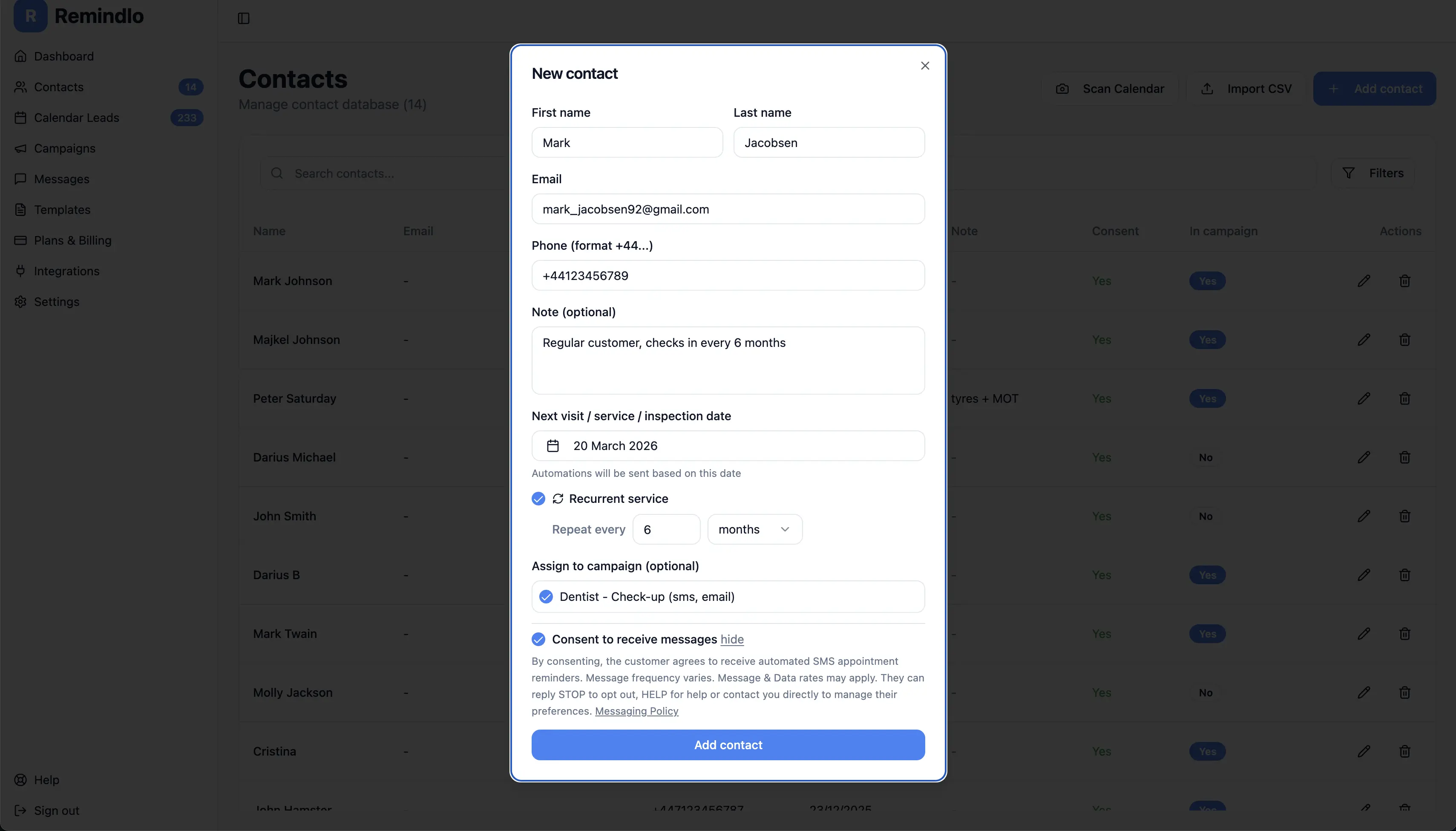
Your responsibility: You should obtain consent from your customer at the point of service - during their first visit, when booking an appointment, or when they provide their phone number. Remindlo records this consent digitally, but the act of obtaining it is between you and your customer.
Our Messaging Policy
We maintain a transparent End User Messaging Policy that explains to your customers exactly how SMS messaging works through Remindlo. This policy covers what types of messages they may receive, how frequently they can expect messages, how to opt out at any time, how their information is used and protected, and their privacy rights.
You can share this policy with your customers or refer to it if they have questions about the messages they receive. It's publicly available at remindlo.co.uk/messaging-policy.
Giving Customers Control: The Opt-Out Process
Every customer has the right to stop receiving messages at any time. Remindlo supports multiple opt-out methods.
Reply STOP: Your customers can reply STOP (or STOPALL, UNSUBSCRIBE, CANCEL, END, QUIT, OPTOUT, REVOKE) to any message they receive. They will get a confirmation and won't receive further messages.
Reply HELP: If a customer needs assistance, they can reply HELP to any message for information about how to manage their preferences.
Direct contact: Customers can also contact you directly to ask to be removed from reminders. When they do, simply uncheck their consent in Remindlo, and they won't receive further messages. An opt-out sticks: however it was recorded - a STOP reply, unticking the box here, or a call to our API - syncing or reconnecting your calendar will not quietly put it back.
Data deletion: You can remove a customer from the system entirely. This completely deletes their data, fulfilling their "right to erasure" under UK GDPR.
How Customer Data Is Protected
Remindlo takes data protection seriously. When you add customers to the platform, their information is used solely for delivering appointment reminders.
We do not sell, rent, or share customer phone numbers with third parties. We do not use customer data for marketing purposes. We do not share information between different businesses using the platform. All data processing is limited to delivering messages on your behalf.
For full details on how we handle data, see our Privacy Policy.
Your Responsibilities as a Business
While Remindlo provides the tools for compliant messaging, the responsibility for compliance sits with you as the data controller. This means ensuring customers know they'll receive reminders when they book, obtaining and recording consent before adding customers to the system, keeping your Remindlo records accurate and up to date, acting promptly on opt-out requests, and using messages only for their intended purpose - reminders, not marketing.
Summary
Sending appointment reminders through Remindlo is straightforward from a compliance perspective. You're contacting customers who expect to hear from you, about appointments they've booked, with a clear way to opt out if they choose.
The key points to remember: appointment reminders fall under legitimate interest, not marketing consent rules. Always obtain and record consent at first booking. Remindlo provides built-in consent tracking and opt-out handling. Our Messaging Policy is publicly available for your customers. Include opt-out instructions in your messages. Act promptly when customers want to unsubscribe or have their data deleted.
If you have questions about compliance for your specific situation, we recommend consulting with a legal professional familiar with UK data protection law.
Ready to stop losing customers to forgotten appointments? See how Remindlo works for multiple industries and start bringing customers back for their scheduled appointments.