How Product Life Cycles Can Create Predictable Revenue with SMS Reminders
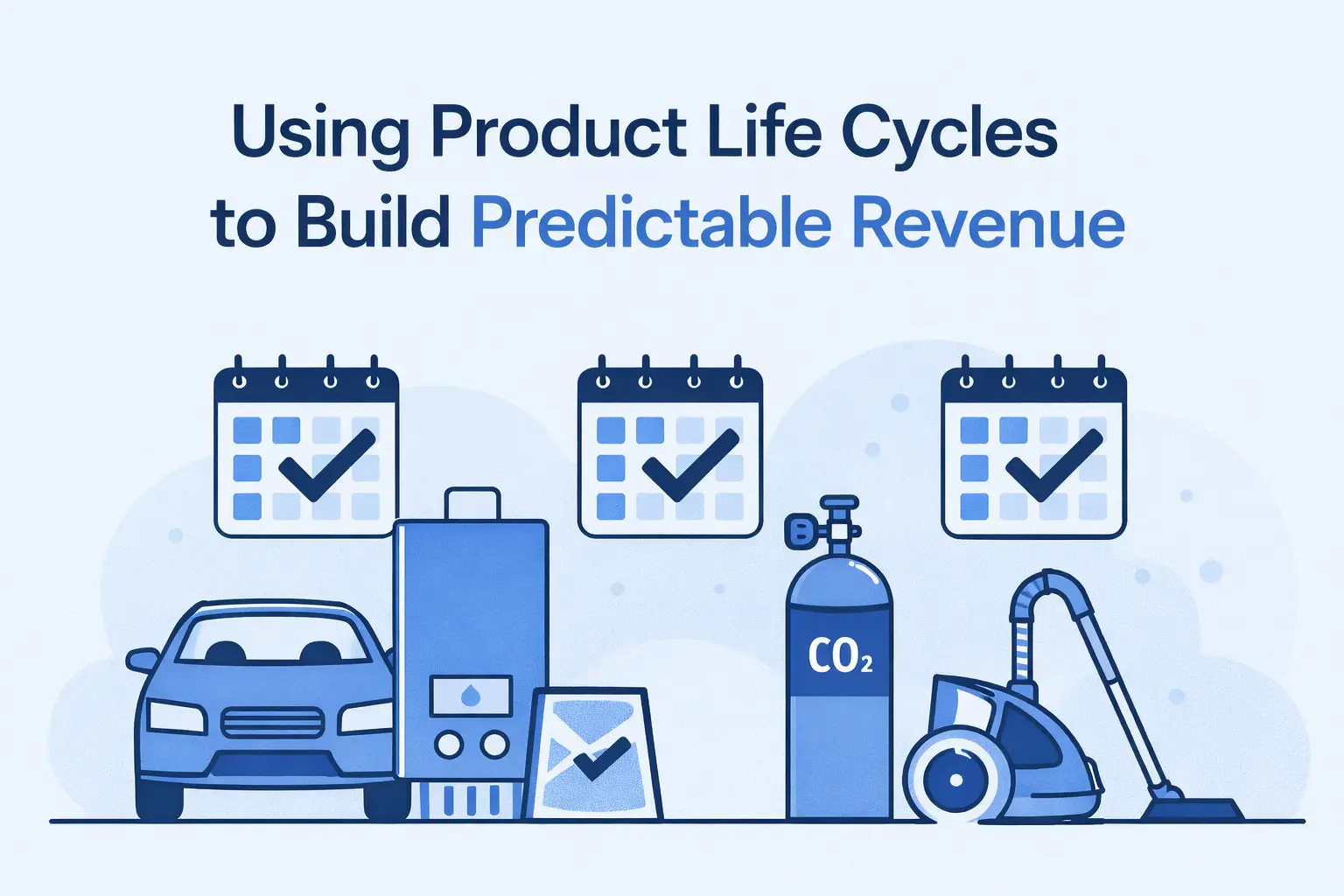
Many products naturally wear out or require regular checks. Businesses that use automated SMS reminders can turn these predictable cycles into recurring revenue and stronger customer relationships.
Contents
- Understanding natural product life cycles
- Why customers forget, and businesses pay the price
- From reactive sales to proactive revenue planning
- Examples of life cycle-driven revenue opportunities
- Why SMS reminders work so well
- Building long-term customer relationships
- Turning life cycles into a revenue strategy
- Summary
Every product has a life cycle - most businesses simply ignore it
Cars need servicing. Boilers need annual checks. Filters clog. Batteries lose power. CO₂ cylinders run empty.
None of this is random.
Yet most businesses treat every sale as a one-time event and hope the customer remembers to come back.
In reality, every product with a known replacement or inspection cycle is an opportunity to generate future revenue. The difference between reactive and proactive businesses is whether they act on that opportunity.
Automated SMS reminders make it possible to do exactly that.
Understanding natural product life cycles
A product life cycle does not mean the end of a product’s usefulness - it means the next predictable moment of interaction.
Common examples include:
car servicing and MOT checks
gas boiler inspections
chimney and flue maintenance
cooker and extractor hood filters
car batteries
water and air filters
CO₂ cylinders for home and business use
smoke alarm batteries
In each case, the timeline is known in advance. The customer simply does not track it.
Why customers forget, and businesses pay the price
Customers rarely forget because they do not care. They forget because life is busy.
They do not remember:
when the battery was last replaced
how often a filter should be changed
when the boiler was last inspected
how long a CO₂ cylinder typically lasts
As a result, businesses lose customers not to competitors, but to silence and delay.
Often the customer only returns after:
a breakdown
a safety issue
an emergency
unnecessary stress
This is bad for the customer experience and bad for revenue planning.
From reactive sales to proactive revenue planning
Most businesses operate reactively. They wait for the customer to notice a problem and come back. Automated reminders change this model entirely. Instead of waiting, the business sends a timely message such as:
It’s been 11 months since your last boiler inspection. It may be time to book your annual check.
This single message shifts the relationship. The business is no longer selling. It is helping the customer stay ahead of problems.
Over time, this creates predictable, repeatable income rather than sporadic one-off sales.
Examples of life cycle-driven revenue opportunities
Automotive and transport
Cars require regular servicing, MOT checks, battery replacements, and safety inspections. Each visit creates a future reminder opportunity.
A garage that records service dates can automatically prompt customers before issues arise, keeping workshops busy and schedules predictable.
Home heating and appliances
Gas boilers, cookers, and heating systems require regular maintenance to remain safe and efficient.
Annual reminders reduce last-minute bookings during peak seasons and position the business as responsible and reliable.
Consumables and replacement parts
Products such as filters, batteries, and CO₂ cylinders follow simple wear patterns. Customers often reorder them late or from a different supplier simply because they forgot.
If you sell those online rather than over a counter, the order data already tells you when to prompt.
A reminder ensures the original seller stays top of mind at the exact moment the product is needed again.
Safety-related products
Smoke alarms, carbon monoxide detectors, and ventilation systems rely on timely checks and replacements.
Businesses that remind customers about safety-related maintenance are perceived as trustworthy and professional, not pushy.
Why SMS reminders work so well
SMS remains one of the most effective communication channels. Messages are read quickly and rarely ignored.
Unlike email, SMS does not require searching an inbox or logging into an app. It arrives at the right time and delivers a single, clear message.
When reminders are:
short
relevant
sent at the right moment
they feel helpful rather than intrusive.
Building long-term customer relationships
When businesses use life cycle reminders consistently, something important happens. Customers stop seeing the relationship as transactional.
Instead of thinking:
“I need to remember to go back there.”
They think:
“They will remind me when it’s time.”
This builds trust, loyalty, and long-term value.
Turning life cycles into a revenue strategy
Every product with a known life cycle can be mapped into a reminder schedule. Over time, this creates:
predictable repeat business
smoother demand planning
reduced reliance on emergency sales
stronger customer retention
The result is a business that generates revenue before problems happen, not after.
For a worked example in a shop setting - what to capture at the till, which cycles are worth tracking, and when to send - see how replacement reminders work in a retail shop.
Summary
Natural product life cycles exist whether businesses use them or not. Those who recognise them and act early gain a powerful advantage.
Automated SMS reminders allow businesses to stay connected, helpful and relevant - while building predictable revenue for the future.
👉 Try Remindlo for free
👉 Set up automated product life cycle reminders in minutes
👉 Turn one-time sales into long term customer relationships