How Bicycle Service Shops Can Turn Spring Customers Into Year-Round Revenue
 by Peter Bednarek, Founder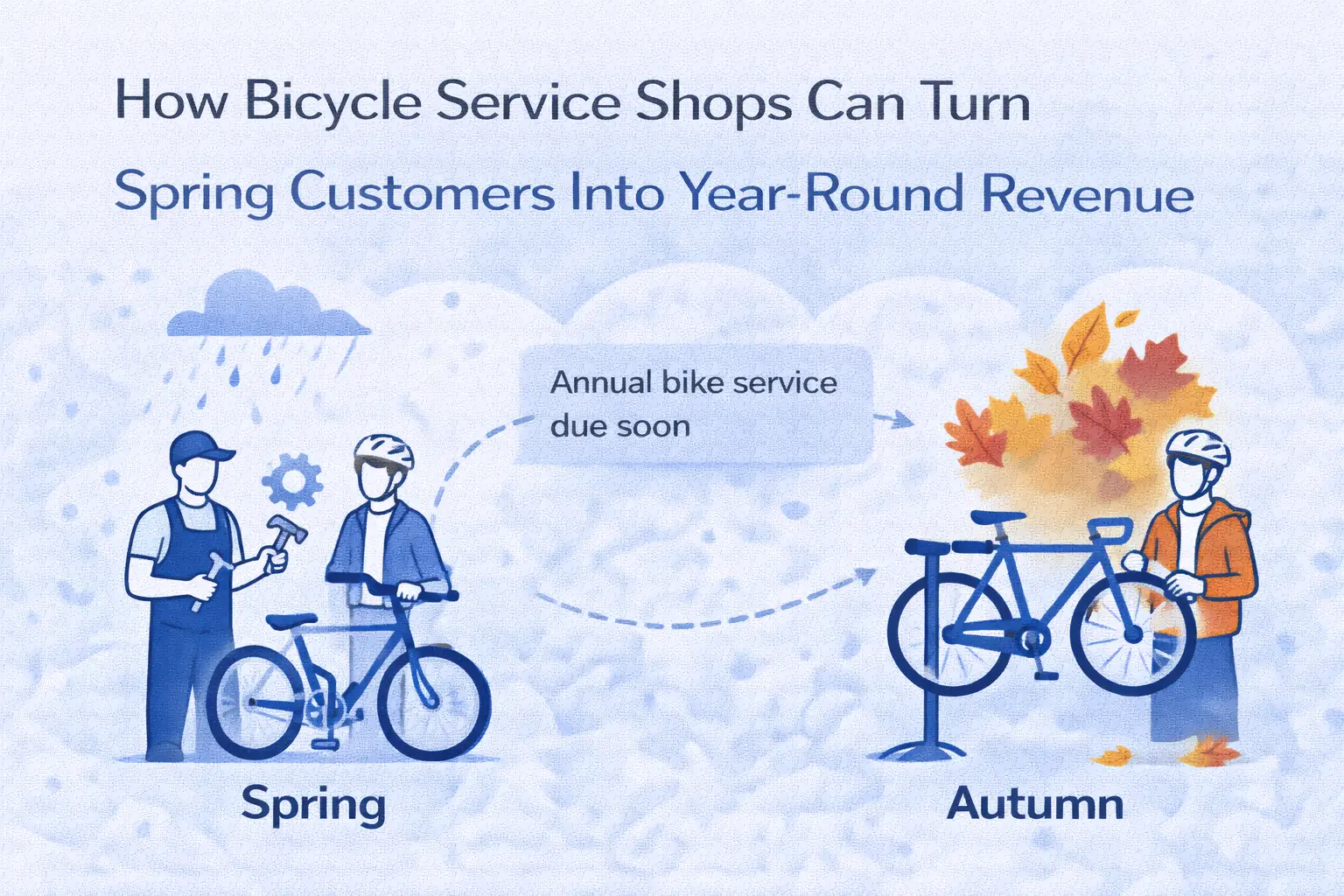
Spring is the busiest time of the year for bike shops. As temperatures rise and days get longer, thousands of cyclists across the UK dust off their bikes and head to their local workshop for a tune-up. For many bicycle service shops, March through May accounts for a disproportionate share of their annual revenue.
Contents
- The seasonal trap: busy in spring, quiet by autumn
- Why bicycle servicing is the perfect use case for automated reminders
- How to capture customer data during the spring rush
- Setting up recurring reminders: the "set it and forget it" approach
- What to include in your reminder messages
- The maths: what one reminder is worth
- Beyond reminders: building a retention system
- Getting started before this spring
But here's the problem most bike shops don't think about: the vast majority of those spring customers walk out the door and never come back - not because they were unhappy, but because they simply forgot. Twelve months later, when their bike needs servicing again, they might go somewhere else, try to do it themselves, or just keep riding a poorly maintained bicycle.
This is a massive missed opportunity. Every customer who walks through your door for a spring service is a potential recurring customer for years to come. The question is: how do you make sure they come back next spring?
The seasonal trap: busy in spring, quiet by autumn
Bicycle servicing is inherently seasonal. Unlike MOT testing, which is legally required and tied to a fixed annual date, bike servicing is entirely voluntary. There's no DVSA reminder letter. No penalty for skipping it. The only thing that brings a cyclist back is their own memory - or a well-timed nudge from you.
The typical pattern looks like this: a customer brings their bike in for a spring tune-up, pays £50-£80 for a full service, and rides off into the sunset. By October, the bike goes back in the shed. By the following March, the customer has forgotten your shop's name, lost the receipt, and either Googles "bike service near me" or puts it off entirely.
For a small bike shop with 2-5 employees, losing even 30% of spring customers to forgetfulness means hundreds - potentially thousands - of pounds in lost revenue each year. And unlike acquiring new customers through advertising, bringing back existing ones costs almost nothing.
Why bicycle servicing is the perfect use case for automated reminders
Bike servicing shares a key characteristic with MOT testing, veterinary check-ups, and boiler servicing: it's a recurring service with a predictable cycle. Most cyclists benefit from a professional service at least once a year, typically before the spring riding season. Some more serious riders service twice a year - before spring and before winter.
This makes bicycle servicing an ideal candidate for automated SMS reminders. Here's why:
The cycle is predictable. If a customer had their bike serviced in March 2026, they'll likely need it again around February or March 2027. You know when to reach out.
The value per visit is significant. A basic tune-up runs £30-£50, while a full service can be £60-£100 or more. Add parts replacements - brake pads, cables, chain, tyres - and a single visit can easily exceed £150. This isn't a £5 transaction; it's worth the cost of an SMS.
There's no competing reminder system. Unlike cars (where the DVSA sends MOT reminders) or boilers (where some manufacturers have their own notification systems), nobody is reminding your cycling customers to get their bike serviced. If you don't do it, nobody will.
Customers genuinely appreciate it. A text message saying "Hi James, you had your bike serviced with us around this time last year - spring's coming, shall we book you in?" doesn't feel like spam. It feels like good service. It's the kind of proactive communication that builds loyalty and generates word-of-mouth referrals.
How to capture customer data during the spring rush
The busiest time of year is also your best opportunity to build a customer database. Every spring customer who gives you their name and phone number becomes a potential return customer for years to come.
Here are practical ways to capture data without slowing down your workflow:
Keep it minimal. You don't need a full CRM profile. A name, phone number, and the date of service is enough to power an automated reminder twelve months later. Some shops also record the type of bike and service performed, which lets you personalise the reminder message.
Make it part of the intake process. When a customer drops off their bike, ask for a phone number "so we can text you when it's ready." This is a natural touchpoint that almost nobody declines. You now have a phone number you can use for pickup notifications and future service reminders - as long as you mention that you'll send an occasional service reminder too.
Use a paper diary? That's fine. Many small bike shops still run on paper calendars and handwritten job cards. You don't need to digitise your entire operation. Tools like Remindlo let you add customers one at a time or import a simple spreadsheet. If you can write down a name, phone number, and date, you have everything you need. You can simply take a picture, and our AI will convert your paper diary into digital records of your customers. No need to spend more than a few minutes on that.
Offer a small incentive. Consider offering a 10% early-bird discount for customers who book their next service before the end of March. This gives you a reason to ask for contact details and creates urgency.
Setting up recurring reminders: the "set it and forget it" approach
The real power of service reminders isn't in sending a single text - it's in automating the entire cycle so you never have to think about it again.
With a tool designed for recurring services, you create a campaign once - for example, "Annual Bike Service Reminder" - and set it to trigger reminders at specific intervals before the next service date. A typical setup might look like this:
30 days before: "Hi {name}, your annual bike service is coming up. Spring's the perfect time to get your bike ready - book now to avoid the rush. Call us on 01onal or reply to this text."
7 days before: "Hi {name}, just a quick reminder - your bike service is due next week. We've got slots available this week if you'd like to get ahead of the spring rush."
The key feature to look for is recurrent visit support. This means that once a customer completes their service, the system automatically calculates the next due date - whether that's 6 months, 12 months, or any other interval you set. You don't need to manually update anything. The cycle continues year after year, bringing customers back like clockwork.
This is exactly how Remindlo's recurring service feature works. You set the reminder cadence once, and the system handles the rest. When a customer comes back, you mark their visit as complete, and the next reminder cycle starts automatically. It's designed for businesses that want to spend their time fixing bikes, not managing spreadsheets.
What to include in your reminder messages
The best service reminder messages are short, personal, and action-oriented. Here are some templates that work well for bike shops:
Pre-season reminder (February):
Hi {name}, spring is around the corner and your bike is due for its annual service. We serviced it around this time last year - shall we book you in? You can always call us on [number] - [Shop Name]
Post-winter check (March):
Hi {name}, winter can be tough on bikes - salt, rain, and cold take their toll. We'd recommend a spring check-up before you start riding regularly. Book in this week and we'll have you ready for the weekend. - [Shop Name]
Gentle follow-up (if no response after 2 weeks):
Hi {name}, just a friendly nudge - your bike service is overdue. A quick tune-up now can prevent bigger (and more expensive) problems later. We've got slots this week. - [Shop Name]
If you need more inspiration, Remindlo's free SMS template generator can create industry-specific messages tailored to your business.
The maths: what one reminder is worth
Let's do some simple arithmetic. Say your average spring service brings in £70, including parts. If you service 200 customers during spring, that's £14,000 in seasonal revenue. Now put in a recovery rate you actually believe: the published trials of recall reminders found take-up 1.29 times higher after a text (our sources), and they were run on vaccination recall rather than bicycle servicing, so treat it as a direction rather than a promise.
Even at the conservative end - 10% recovery - that's 20 additional customers, or £1,400 in recovered revenue. At 30%, you're looking at 60 customers and £4,200. A basic SMS reminder service costs £15-£49 per month, depending on volume. The ROI is difficult to argue with.
And this compounds over time. A customer who returns for their second service is far more likely to return for their third, fourth, and fifth. You're not just recovering a single visit - you're establishing a relationship that could be worth hundreds of pounds over several years.
Beyond reminders: building a retention system
Automated reminders are the foundation, but the smartest bike shops go further:
Segment your customers by bike type. Road bikes, mountain bikes, and e-bikes have different service needs and schedules. E-bikes in particular benefit from more frequent check-ups due to the additional wear on drivetrains and the complexity of electrical systems. If your reminder tool supports custom campaigns, create separate ones for each bike type.
Track what was done and what's coming up. If you replaced a customer's chain this spring, make a note. Next year's reminder can say "We replaced your chain last year - it might be time to check the cassette too." This level of personalisation shows expertise and care that generic reminders can't match.
Use Autumn. One strategy could be to offer a post-season service to the customers you have already saved in your database. A small discount or a well-timed message could also turn a quiet month into a solid revenue month. When days are shorter on the sun, and customers have more time, some of them may prefer to do things like a bike service if they understand the benefits of no rush, no queue, no overprice during the winter spree.
Winter is your opportunity to prepare. Import your spring customer list, set up your reminder campaigns, and make sure everything is ready to fire before February. When the rush hits, you'll be focused on servicing bikes, not chasing customers.
Connect with your existing tools. If you already use Google Calendar to manage bookings, look for a reminder service that integrates directly so you don't need to enter data twice.
Getting started before this spring
The best time to set up a reminder system is before your busy season starts. Here's a simple action plan:
Gather your existing customer data. Check last year's job cards, invoices, or booking system for names and phone numbers. Even 50 contacts is a solid starting point.
Choose a reminder tool built for recurring services. You need something designed for small service businesses - not a generic marketing platform that requires hours of setup. Compare your options and pick one that fits your workflow.
Create your first campaign. Set up an "Annual Bike Service" campaign with reminders at 30 days and 7 days before the due date, and enable recurrent visits so the cycle repeats automatically.
Start capturing data this spring. Every customer who walks through the door is a future repeat customer. Add them to your system as they come in.
Review and refine after the season. Check how many customers responded to reminders, what your return rate looks like, and adjust your messaging for next year.
Spring customers are the lifeblood of bicycle service shops. With a simple, automated reminder system, you can turn a one-time visit into a recurring relationship - filling your workshop year after year without spending a penny on advertising.
Ready to stop losing customers to forgetfulness? Start a free Remindlo account and set up your first bike service reminder campaign in under 5 minutes. No credit card required.
More seasonal trade guides: why roofers should book autumn inspections and gardeners and landscapers.