Reduce No-Shows at Your Vet Practice in 2026: A Complete Guide for UK Veterinary Clinics
 by Peter Bednarek, Founder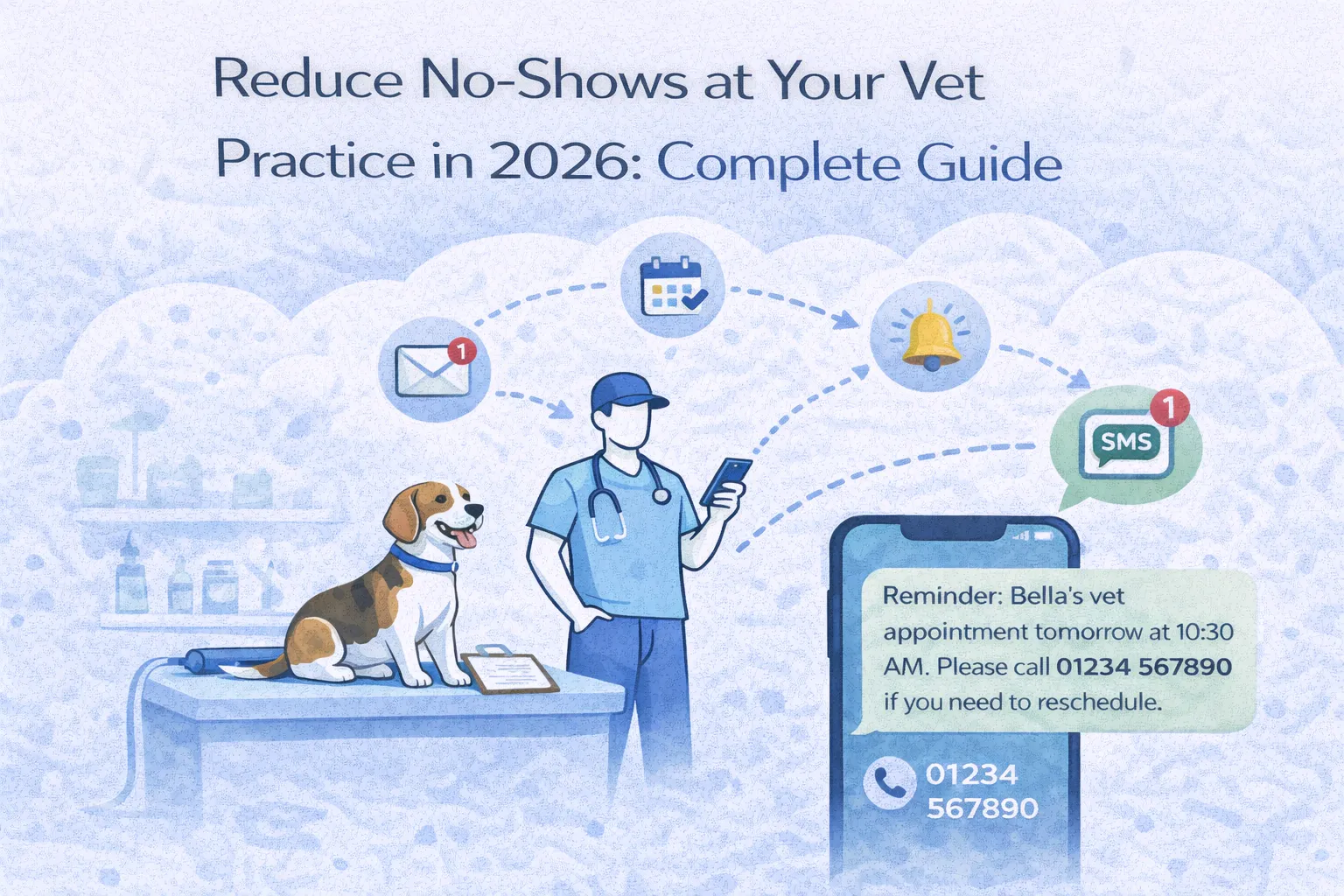
No-shows are one of the most frustrating challenges facing UK veterinary practices in 2026. With over 5,000 vet practices across the country serving a pet population of more than 11 million dogs and 10 million cats, the demand for veterinary care has never been higher. Unfortunately, missed appointments continue to drain revenue, waste clinical time, and disrupt the care that pets genuinely need.
Contents
If you're running a vet practice and losing income to clients who simply don't turn up, this guide walks you through why it happens, what it really costs, and what the most effective practices are doing differently.
What No-Shows Actually Cost Your Veterinary Practice
The financial impact of missed appointments is larger than most practice owners realise. Industry data suggests that the average no-show rate across veterinary clinics sits at around 11%. For a mid-sized practice with three vets, that can translate to over £90,000 in lost revenue per year - money that's gone before you even account for the wasted staff time, empty consultation slots, and medications prepared but never administered.
But the cost isn't purely financial. Every missed vaccination appointment is a pet going unprotected for longer. Every skipped booster is a window where preventable disease becomes more likely. And every empty slot is time your team could have spent with an animal that genuinely needed care.
Calculate your potential profit
See how much you can earn by recovering lost customers
Your data
What that could be worth
5-year projection
Assumes every recovered customer then returns each year
No credit card required • Full access • 10 SMS per month
Both percentages here are assumptions you set, not measurements. What we have actually measured, and the published research on reminders: our sources.
For a typical UK vet consultation averaging around £58, even a modest improvement - bringing your no-show rate down from 11% to 7% can recover thousands of pounds annually while improving patient outcomes across the board.
Why Clients Miss Vet Appointments
Understanding why clients don't show up is the first step to fixing the problem. The research paints a consistent picture across practices of all sizes.
The overwhelming majority - around 60 to 70% - simply forget. Life gets busy, the appointment was booked weeks ago, and without a prompt, it slips out of mind entirely. Another 15 to 20% encounter genuine scheduling conflicts: work commitments change, childcare falls through, or transport becomes an issue. A smaller proportion, perhaps 5 to 10%, don't attend because their pet seems better and they assume the visit is no longer needed. And a final group faces financial concerns - with 51% of UK pet owners reporting worry about vet costs in 2025, this isn't a trivial factor.
The good news? The biggest cause - forgetting - is also the easiest to solve.
7 Proven Strategies to Reduce No-Shows
1. Send Automated SMS Reminders
This is the single most effective intervention available to any vet practice. In eight randomised trials of healthcare appointments, 78.6% of people attended after a text reminder against 67.8% with none (where our figures come from).
The reason is straightforward: text messages have a 98% open rate, and most are read within three minutes. Compare that to email (often buried or ignored) or phone calls (which go to voicemail more often than not), and it's clear why SMS works.
The most effective reminder sequence is:
48 hours before: An initial reminder with the date, time, and pet's name. This gives clients enough notice to reschedule if needed.
24 hours before: A confirmation prompt. Asking the client to reply "YES" to confirm creates a small psychological commitment.
2 hours before (optional): A same-day nudge for practices with persistently high no-show rates.
Personalisation matters here. A message that says "Hi Sarah, just a reminder that Bella's vaccination appointment is tomorrow at 10:30am" performs significantly better than a generic "You have an appointment tomorrow."
Reminder services like Remindlo let you automate this entire sequence without any manual effort from your reception team. You set up the contact, the reminder date, and the system handles the rest -including follow-ups for recurring appointments like annual vaccinations and boosters.
2. Build a Vaccination and Booster Reminder Calendar
Veterinary care is inherently cyclical. Annual vaccinations, booster shots, flea and worm treatments, dental checkups, and senior pet wellness visits all happen on predictable schedules. Yet many practices still rely on clients remembering these dates themselves. Here's where pet vaccination reminders come into play.
Setting up an automated reminder calendar for each patient means you're reaching out proactively when care is due - not waiting for the client to remember. This approach does double duty: it reduces no-shows for booked appointments and drives rebookings for recurring care that might otherwise lapse.
Reminder Type | Typical Cycle | Revenue Per Visit |
|---|---|---|
Annual vaccination | 12 months | £50–80 |
Booster shots | 12 months | £40–60 |
Flea/worm treatment | 1–3 months | £15–30 |
Senior pet checkup | 6 months | £40–60 |
Dental checkup | 12 months | £100+ |
Each of these represents both a clinical need and a revenue opportunity. A systematic reminder approach ensures neither falls through the cracks.
3. Offer Easy Rescheduling Rather Than Cancellation
When a client can't make their appointment, the worst outcome is a silent no-show. The second worst is a cancellation with no rebooking. The goal should be to make rescheduling so easy that it becomes the default response.
Include a rescheduling link or phone number directly in your reminder messages. If a client texts back "can't make it," have your system or team respond immediately with alternative times. The fewer barriers between "I need to change this" and "I've rebooked," the fewer appointments you lose entirely.
4. Introduce a Clear No-Show and Late Cancellation Policy
This needs to be communicated gently but consistently. Most clients don't realise the impact a missed appointment has on your practice -they assume you simply see the next person. Making your policy visible at booking, in confirmation messages, and on your website sets expectations without being confrontational. If you haven't got one written down yet, our free no-show policy generator produces a printable policy you can display at reception or on your website.
Some practices charge a small fee for repeated no-shows (typically £10–20). Others require a deposit for specialist or surgical appointments. The fee itself matters less than the signal it sends: your time has value, and appointments are commitments.
5. Send Pre-Visit Instructions That Create Engagement
A reminder that includes useful information -fasting requirements before a procedure, what to bring, or parking instructions -gives the client a reason to engage with the message rather than just glancing at it. That engagement creates a stronger mental link to the appointment.
For vaccination appointments, a brief note like "Please bring Bella's vaccination record if you have it" turns a passive reminder into an action item, making the appointment feel more concrete and harder to forget.
6. Use Waitlists to Fill Cancelled Slots
Even with the best reminder system, some clients will cancel. A waitlist ensures those slots don't go to waste. When a cancellation comes in, your team (or your automated system) can immediately offer the slot to a client who's been waiting for an earlier appointment.
This approach requires knowing who wants earlier availability -which means asking at booking and keeping a running list. The practices that do this well recover 50 to 70% of cancelled slots.
7. Track Your No-Show Data and Act on Patterns
You can't improve what you don't measure. Start tracking no-shows by day of week, time of day, appointment type, and client demographics. Common patterns that emerge include higher no-show rates on Monday mornings and Friday afternoons, higher rates for "routine" appointments (checkups, vaccinations) versus urgent or surgical visits, and repeat offenders -a small percentage of clients often account for a disproportionate share of missed appointments.
Once you see the patterns, you can respond: overbook slightly during high-risk slots, send additional reminders for appointment types that tend to be missed, and have direct conversations with clients who regularly don't show.
The Technology Shift: Why 2026 Is Different
The veterinary technology landscape is changing fast. IDEXX identified automated client communication as one of the seven key trends shaping veterinary practices in 2026, with AI-powered systems now able to optimise reminder timing, personalise message content, and adapt based on client response patterns.
But you don't need an enterprise-level practice management system to get started. Lightweight, purpose-built tools can deliver the most impactful change -automated SMS reminders -without replacing your existing workflow.
Veterinary SMS reminder software like Remindlo was built specifically for UK service businesses that rely on recurring appointments. For vet practices, that means you can set up vaccination reminders, booster follow-ups, and routine care prompts that go out automatically via SMS - with no manual effort from your team after the initial setup. It integrates with Google Calendar, offers an API for custom SMS workflows, and starts from a free plan with 10 SMS messages included.
Quick Wins You Can Implement This Week
If you want to start reducing no-shows immediately, here are three things you can do before the end of the week:
Start sending SMS reminders for tomorrow's appointments. Even manual reminders sent the day before will make a noticeable difference. Better yet, set up an automated system so you never have to think about it again.
Add a rescheduling prompt to your reminder messages. Something as simple as "Can't make it? Call us on [number] to rebook" reduces silent no-shows.
Begin tracking your no-show rate. Count missed appointments this week, calculate the percentage, and note the revenue those empty slots represent. Having a baseline number makes it much easier to justify investing in a proper solution.
The Bottom Line
No-shows are a solvable problem. The practices seeing the best results aren't doing anything revolutionary - they're simply making it easier for clients to remember, confirm, and reschedule appointments. Automated SMS reminders are the highest-impact, lowest-effort intervention available, and the data backs that up consistently.
With 54% of UK households now owning pets and veterinary care costs continuing to rise, the practices that communicate proactively will retain more clients, deliver better care, and protect their revenue. The ones that don't will keep losing money to empty appointment slots.
Frequently Asked Questions
What is a typical no-show rate for UK vet practices?
The average no-show rate across UK veterinary practices sits at around 11%. This means roughly one in every nine booked appointments results in a client not turning up - costing mid-sized practices over £90,000 per year in lost revenue.
How much can SMS reminders reduce no-shows at a vet clinic?
Reminders work because they arrive in time to act on. SMS has a 98% open rate and most messages are read within three minutes, making it far more effective than email or phone calls. What the trials measure is attendance: 78.6% with a text reminder against 67.8% without (our sources).
When is the best time to send appointment reminders to vet clients?
The most effective approach is a two-step sequence: an initial reminder 48 hours before the appointment (giving clients time to reschedule if needed) followed by a confirmation prompt 24 hours before. For practices with persistently high no-show rates, adding a same-day reminder two hours before can help further.
Should vet practices charge for missed appointments?
Some practices charge a small fee (typically £10-20) for repeated no-shows, while others require deposits for specialist or surgical appointments. The fee itself matters less than clearly communicating your policy at booking and in confirmation messages. Most clients don't realise the impact a missed appointment has on the practice.
What is the main reason clients miss vet appointments?
The overwhelming majority of no-shows - around 60 to 70% - are caused by clients simply forgetting. This is followed by scheduling conflicts (15-20%), the pet appearing to improve (5-10%), and financial concerns (5-10%). Since forgetting is the biggest cause, automated reminders address the root of the problem directly.
How do automated reminders help with pet vaccination schedules?
Veterinary care is inherently cyclical, with annual vaccinations, boosters, flea and worm treatments, and dental checkups all happening on predictable schedules. An automated reminder system contacts pet owners proactively when each type of care is due, ensuring pets stay protected and your practice retains recurring revenue.
Remindlo helps UK veterinary practices reduce no-shows with automated SMS reminders. Start your free account - no credit card required.