Your Customers Already Own the Check-Up Tool: Turn Their Apps Into a Reason to Come Back
 by Peter Bednarek, Founder
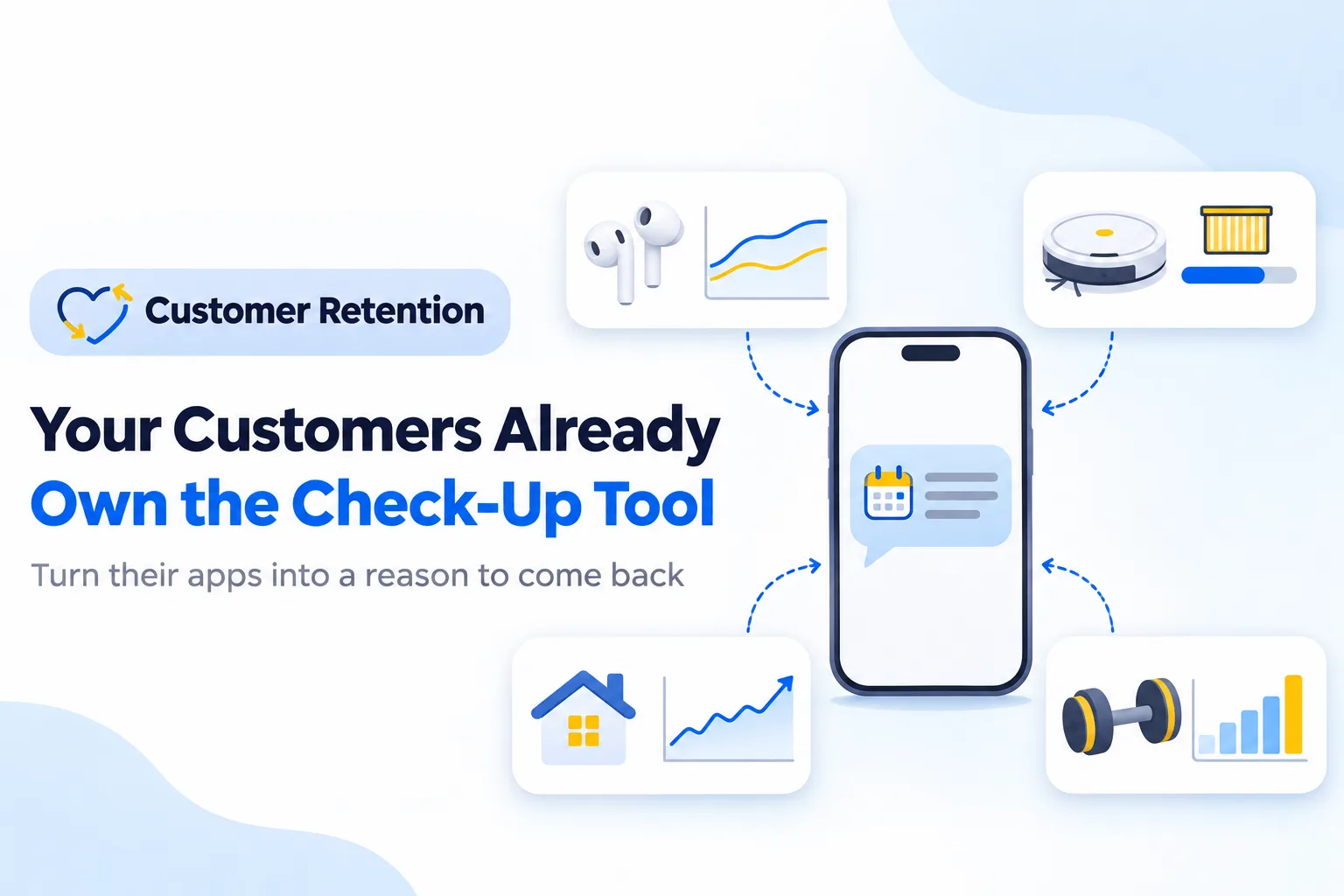
Most of your customers already own a device that can tell them when they need you. Earbuds that run a hearing test, a robot vacuum that tracks its filter, a smart meter that shows gas and electricity use, a fitness app that logs every workout. Send a short reminder to check it, and invite them to book if something looks wrong. The check gives them a reason to come back, and the screenshot gives you the history.
Contents
The five-minute test that started this
I took a hearing test last month. Not at an audiologist: on an iPhone, with a pair of AirPods Pro, sitting at a desk. The phone plays tones, you tap when you hear one, and a few minutes later you have a chart for each ear. Apple says the test takes about five minutes, and it has been available in the UK since December 2024.
It is not a diagnosis, and it does not pretend to be one. But it did something no leaflet in a waiting room ever managed: it made a hearing check feel like something you just do, the same way you check your step count.
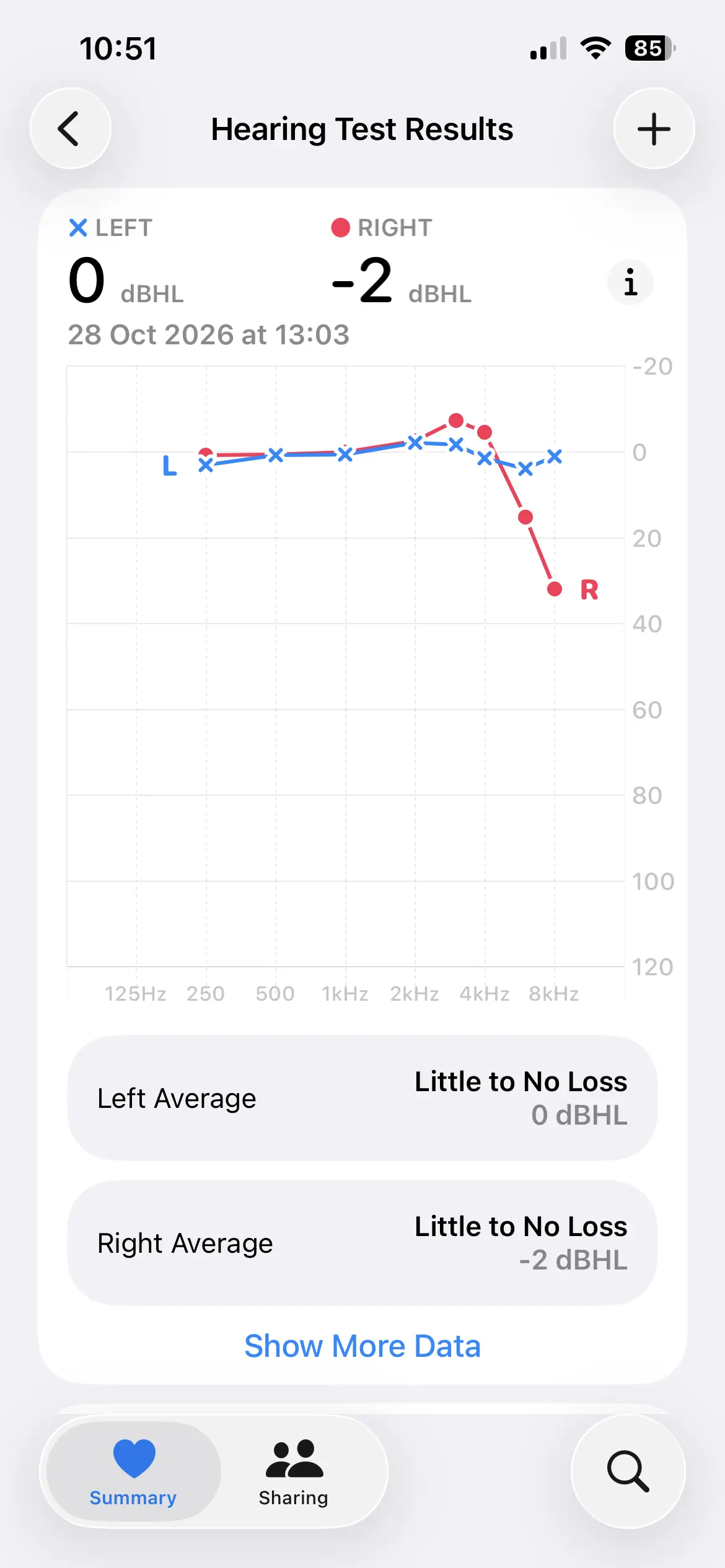
That raised an obvious question for anyone running a hearing care practice. If thousands of your past customers have a decent screening tool in their pocket, why wait for them to notice a problem on their own?
The device is the reminder you don't have to build
Every service business that relies on repeat visits has the same problem. The customer does not think about you between visits. Then something goes wrong, or a year slips by, and by the time they remember you they have already found someone else, or decided it can wait.
The usual fix is a reminder on a schedule: "It's been a year, time for your check-up". That works when there is a fixed interval, like an annual boiler service or an MOT. It works less well when the right moment depends on what is actually happening to the customer: their hearing, their heating bill, their training plan.
That is where the customer's own technology comes in. The reminder no longer says "come and see us". It says "take two minutes and look at this, and tell us if anything has changed". You are not selling a visit. You are asking them to check something they own, and making it easy to act on what they find.
Three things make this work better than a plain "we miss you" text:
It is useful even if they don't book. A customer who checks and finds everything fine has still had a helpful message from you. That is the opposite of the reminder that gets them to unsubscribe.
It gives them a concrete reason. "My hearing chart has dropped since last spring" is a much stronger push to book than "it's been a while".
They arrive with data. People forget things, or leave out the detail that matters. A screenshot of a chart, a meter graph or a workout log is a complete record they did not have to remember.
Hearing care: the clearest example
For an audiologist or independent hearing care practice, the flow is simple.
A customer who came in for a hearing test, or bought hearing aids, gets a text six months after the visit and again at twelve.
The text asks them to take the test on their phone if they have compatible earbuds, and to book if anything worries them: the result has changed, they struggle in noisy rooms, or family members say the TV is too loud.
If they book, they bring the result with them, or email it before the visit.
At the appointment, you repeat the test properly on calibrated, professional equipment. Then look at the results side by side, and discuss whether they need hearing aids, an adjustment to the ones they have, or nothing at all yet.
A template you could start from:
Hi {{first_name}}, it's {{business_name}}. Got AirPods Pro? Try the free hearing test on your iPhone. Anything changed with the results? Book: {{business_booking_url}}
A version for customers without the gadget (many won't have it, and the reminder should still work for them):
Hi {{first_name}}, {{business_name}} here. Struggling more in noisy places, or turning the TV up? A quick check now is easier than catching up later: {{business_booking_url}}
Two things to keep straight in the wording. The phone test is a screening tool, so present it as a reason to talk to you, not a verdict. And a hearing result is health information, so ask customers to bring it or email it to you; don't encourage them to post it anywhere public, and handle what they send the way you handle the rest of their records.
We cover more of the sector on our hearing care page.
Other customer tools that work the same way
Once you start looking, most service businesses have an equivalent. The pattern is always the same: the customer already collects the data, they just never look at it.
Robot vacuums and home appliances
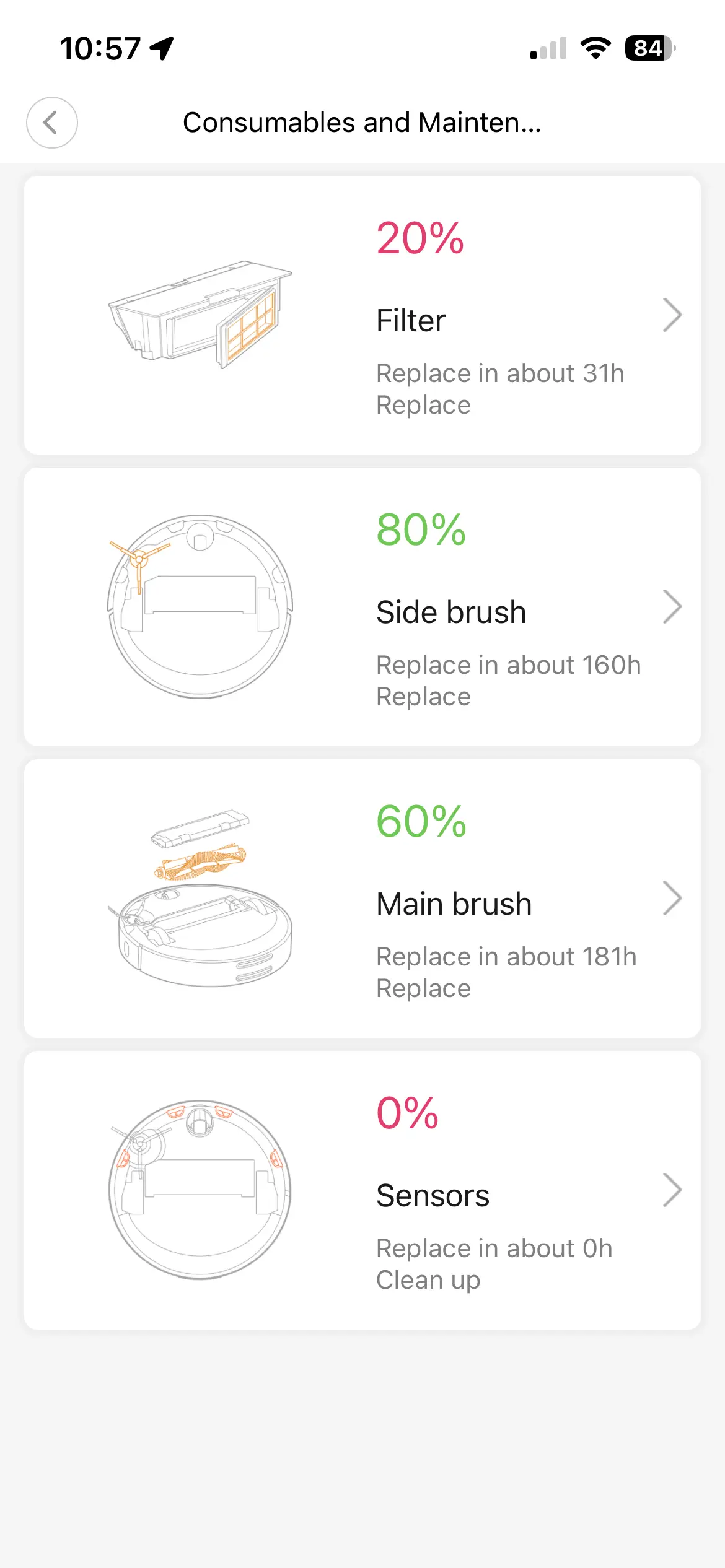
Robot vacuum apps track brush and filter life and show warnings when parts are worn. A cleaning company or an appliance repair shop can send a seasonal text: "Open your vacuum app. Filters or brushes in the red? We can replace them, or give the whole machine a service." Washing machines, dishwashers and air purifiers increasingly do the same.
Smart heating, energy and water
Smart thermostats and the apps from UK energy suppliers show daily gas and electricity use. A boiler that has started working harder, or a heat pump using more than it did last winter, often shows up in the numbers before it shows up as a breakdown.
We know this one from the customer's side too. I simply got tired of describing heating problems from memory and built a small system that logs the house every couple of minutes: the temperature and valve opening in each room, the flow and return temperatures on the pipes where the heat comes in, the outside weather, even how much power the circulation pumps draw. It changed the conversations with service engineers more than anything else. "The bedroom is cold in the mornings" became a week of charts showing when the room started heating, how far the valve opened and what the water temperature was doing at the time. The engineer gets to the cause faster, and nobody has to rely on a half-remembered description of last Tuesday.
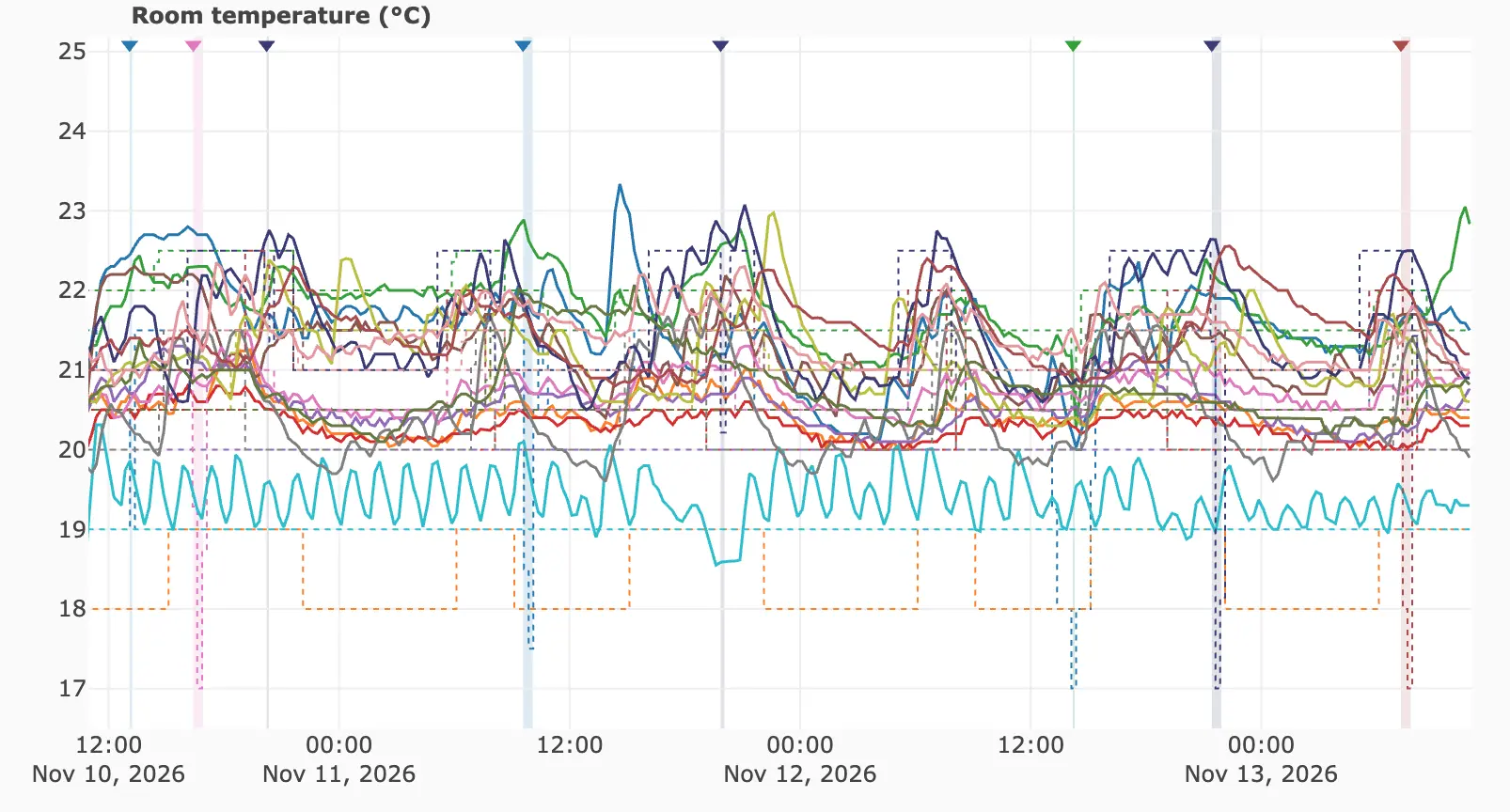
Most of your customers will never build anything like that, and they don't need to. The same principle works with whatever data they already have.
For a heating engineer, the reminder writes itself:
Hi {{first_name}}, {{business_name}} here. Before winter, have a look at your gas usage in your supplier's app. Higher than last year? Book a check: {{business_booking_url}}
You don't need the customer to have a smart thermostat. Most energy and many water suppliers already show usage online, so a screenshot from the account they already log into is enough. A sudden jump in water use is worth a plumber's visit; a jump in gas use is worth a boiler check. See how this fits with annual boiler service reminders.
Garden irrigation controllers are the summer version: a system that suddenly runs longer or uses more water usually means a leak or a blocked zone, which is a job for the gardener who installed it.
Fitness, nutrition and wellbeing apps
For personal trainers, gyms and dietitians, the app is the customer's progress log. The reminder isn't "we haven't seen you". It is a nudge to look back:
Hi {{first_name}}, it's {{business_name}}. Look at your last month in your training app. Stuck, bored or skipping sessions? Let's fix the plan: {{business_booking_url}}
A plateau in weight, workouts that have dropped from four a week to one, or a food log that stopped in February are all reasons someone might want help, and most people won't ask for it unprompted. The log also saves the first twenty minutes of the next session, because you see what happened instead of hearing a half-remembered version. More on personal trainer no-shows if that is your sector.
Cars
Most newer cars have a manufacturer app that shows service warnings, tyre pressure and battery health. A garage can ask customers to check it before a long trip or the winter, alongside the usual MOT and service reminders.
How to get the screenshot without a reply button
Here is the practical catch. In the UK, business texts usually arrive from a sender name, such as your business name, rather than a phone number. That is good for recognition, but it means the customer can't reply to the text, and an ordinary SMS can't carry a picture anyway.
So build the route into the message:
Email. Add "Send us a screenshot: {{business_email}}" to the text. This is the simplest option and keeps everything in one inbox.
Bring it to the visit. For hearing results or fitness logs, "bring your phone, we'll look at it together" is often the better experience.
Your booking form. If your booking page lets customers add notes or attachments, point them there, so the data arrives with the appointment.
A phone call. For customers who would rather talk, include {{business_phone}}.
Pick one and use it consistently. A text that offers four ways to respond gets fewer responses than one with a single clear step. We wrote more about this in our piece on the call to action in an SMS reminder.
Setting it up in Remindlo
This is a reactivation campaign with a different message, not a new kind of campaign.
In Campaigns, open your reactivation (after-visit) campaign, or create a new one for this check.
Set when it sends, counted in days after the customer's last visit. Two points, for example 180 and 365 days, work well for most checks: one at the half-year mark, one at the year.
Write the message from one of the templates above, with the variable for your email or booking link.
Turn on auto-enrol so every customer with a past visit gets it at the right time, without you choosing them one by one.
If you run several services, make a separate campaign for each check. A boiler customer shouldn't get the water-usage text, and a hearing aid wearer needs a different message from someone who came in once for a test. Our guide to getting past customers back covers timing in more detail.
One rule applies whatever the device: these are marketing messages, so send them only to customers who agreed to hear from you, and make it clear how to stop them.
FAQ
Is a phone hearing test good enough to replace an audiologist?
No. It is a screening tool that can show a change and give someone a reason to book. A full assessment on calibrated equipment, in a quiet room, with a professional reading the results, is still how hearing loss is diagnosed and how hearing aids are fitted.
What if most of my customers don't have the device?
Write the reminder so it works without it. Mention the device as one way to check, then list the everyday signs that matter (the TV is too loud, the bill is higher, the workouts have stopped) so everyone has a reason to read on.
Can customers reply to the text with a screenshot?
Usually not in the UK. Texts sent from a business name can't receive replies, and SMS doesn't carry images. Ask for the screenshot by email, or ask the customer to bring their phone to the appointment.
How often should I send this kind of reminder?
Once or twice a year is enough for most checks, and lines up with when people naturally think about them: before winter for heating, the new year for fitness. More often than that and the reminder becomes noise.
Which businesses does this work for?
Any business whose customers own a device or an account that measures something you care about: hearing care, heating and plumbing, cleaning and appliance repair, gardeners with irrigation, personal trainers, gyms, dietitians and garages.